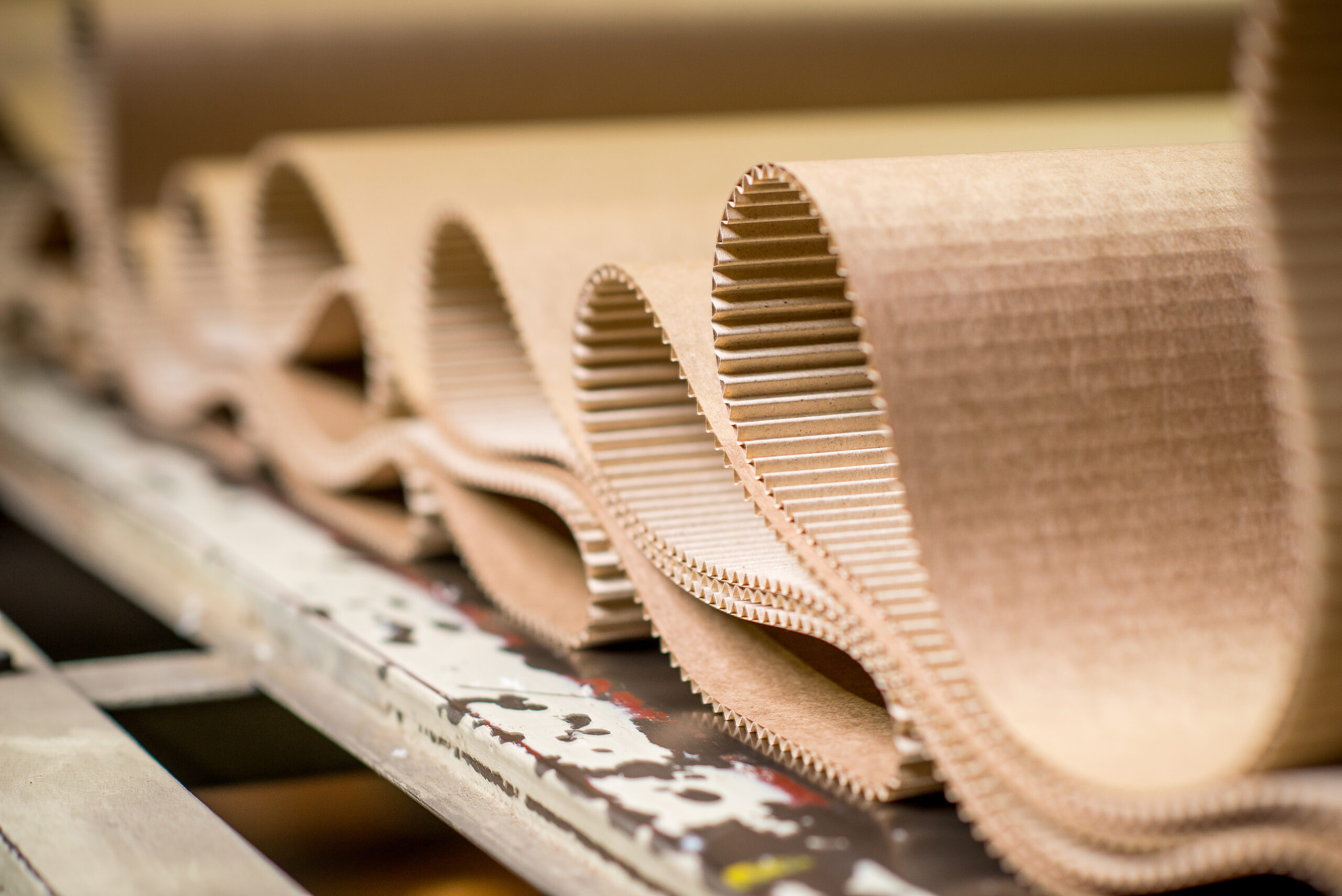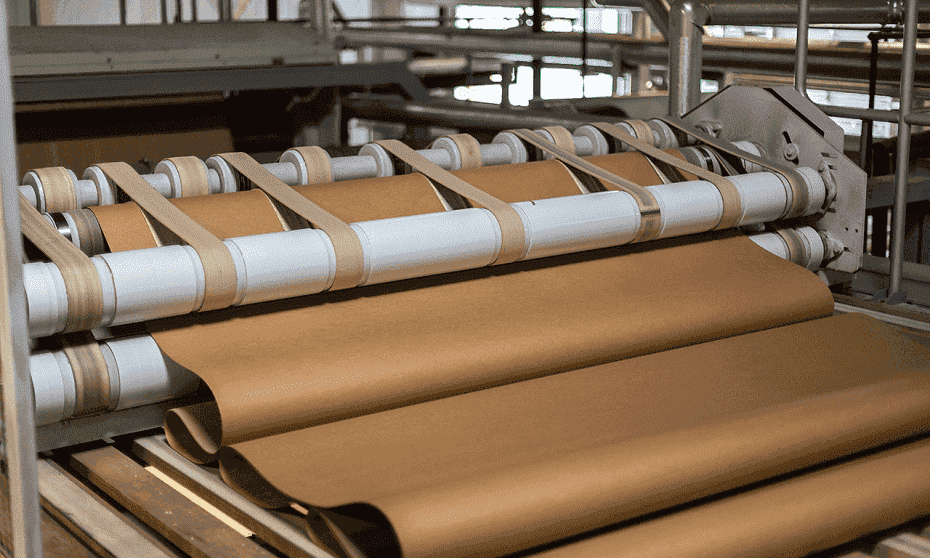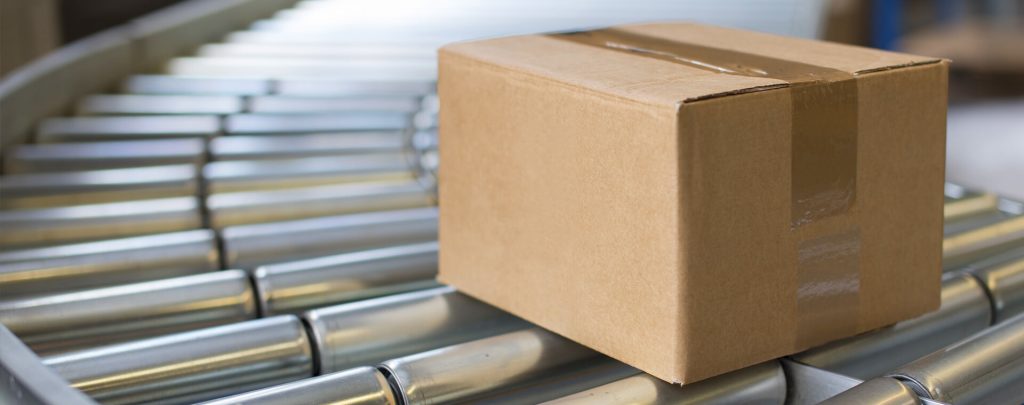
Corrugated cardboard has a rough surface, strong ink absorption, and its corrugated structure is prone to collapse under pressure. Therefore, its printing process is completely different from that of ordinary paper. The mainstream printing method is flexographic water-based ink printing (accounting for over 70%), and the process is divided into two types: "direct printing" (printing on formed corrugated boards) and "pre-printing" (printing the surface paper first and then laminating). Printing quality not only affects the identification and appearance of products, but also directly relates to the safety of transportation and stacking - full-page printing can reduce the compressive strength by more than 30%.
Prepress Design
Font Size: Avoid using text with a size of ≤ 2 cm. It will be illegible from 5 meters away and lose its promotional effect;
Color selection: The corrugated paper has a dark base color, so high-saturation and strong tinting power ink (such as bright red) must be used; otherwise, the color difference will be obvious.
Graphics Simplification: Prohibit full-page printing and horizontal gradient band patterns (they are prone to crushing the corrugated material, causing stress concentration and fracture);
Document specifications: Submit in PDF/X-1a format, CMYK mode, 300dpi resolution, 3mm bleed around the edges, and text in curved format.
Printing Process
Pressure control: The printing pressure should be minimized, and the printing surface must be at least 15mm away from the horizontal crease line to avoid ink rejection in the pressure line area;
Ink management: Add 1%–2% ink stabilizer every 0.5–1 hour to prevent viscosity increase due to solvent evaporation and color difference;
Equipment status: Ensure that the screen roller and the printing plate are clean; If the thickness of the printing plate is uneven, adhesive tape should be pasted on the back to level it. The gap of the pressure roller must match the thickness of the cardboard.
Overprinting accuracy: Priority small area graphics and text first printing, large area after printing, prevent color before dry lead to transfer dirty imprinting version; The overprint error should be ≤1mm.
Post-processing and Storage
Plate material maintenance: Fixed-position management of the hanging plate rack, and timely removal of expired plates. Promote the use of cold welding to fix plate bars to prevent displacement;
Environmental Control: Implement 5S on-site management (sorting, organizing, cleaning, maintaining, and cultivating a good work ethic), ensuring no dust or oil stains on equipment surfaces;
Carton storage: Dry and well-ventilated, with controllable temperature and humidity. Avoid stacking too high to prevent damage to the corrugation type.
Corrugated box printing is not merely about "printing clearly", but "printing scientifically" : each operation needs to balance aesthetics, functionality and structural safety. We have a three-step self-inspection mechanism --
① Before starting: Check the ink viscosity, the flatness of the printing plate, and the gap of the pressure roller;
② During printing: Inspect the registration accuracy and color difference every 30 minutes, and record the frequency of ink addition;
③ After unloading: Check each of the 8 items in the table one by one, and keep the "Finished Carton Inspection Record".
For the problems such as ink smearing and double images that have been found, we will first investigate the hardware causes such as wear of the screen roller, uneven thickness of the printing plate or inaccurate pressure roller.