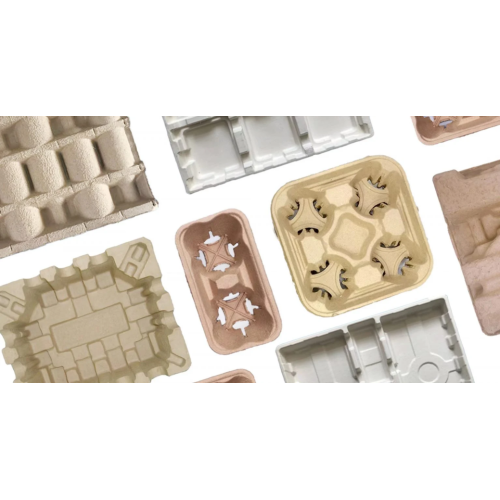
Molded Pulp (also known as
pulp molding) is a three-dimensional environmentally friendly packaging material made from plant fibers such as waste paper, bamboo pulp, and bagasse. It is widely used in
fresh fruit trays, inner linings of electronic products, and daily necessities buffer parts, etc. It has three core attributes:
degradable, recyclable and non-toxic and harmless. However, its recycling is not simply a matter of "throwing it into a waste cardboard box" and then everything is fine - because it contains waterproof and oil-proof additives, composite structures or pollution residues, it needs to be classified and treated to truly close the loop.
Consumer: Source classification is the first step
Correct approach:
Empty the contents after use + simply rinse (especially food trays) to avoid oil pollution and fruit residue pollution of fiber;
Remove the plastic labels/tapes (such as the PE stickers attached to some fruit trays), as they are not allowed to be mixed with paper-based impurities;
Put into the recyclable waste bin (not other waste), and confirm that the local recycling system accepts pulp molding (most cities have included it, but it is necessary to avoid mixing it with wet waste).
Common misunderstandings:
Directly connect stains/plastic film discarded → cause the whole batch of waste paper fiber degradation or rejection;
Although pulp can be degraded, the municipal composting plant can not handle the molded products, which is easy to block the equipment.
Company: Design for Recycling, Responsibility Extends to the End of Life
Product Side:
Adopt a single material design (such as pure bamboo pulp + water-based waterproofing agent), avoid paper-plastic/paper-aluminum composite structures, and reduce the difficulty of recycling.
Printing should use water-based inks (such as Lenovo packaging standards), and coatings containing heavy metals or difficult to decompose are prohibited.
Operation side:
Establish reverse logistics: Provide "cashback" service for high-value packaging (such as computer lining), targeted recycling and reprocessing;
Public recycling guidelines: Print QR codes on packaging, link to local recycling sites map and cleaning instructions.
Recycling Plant: Technological Upgrade Solves Separation Challenges
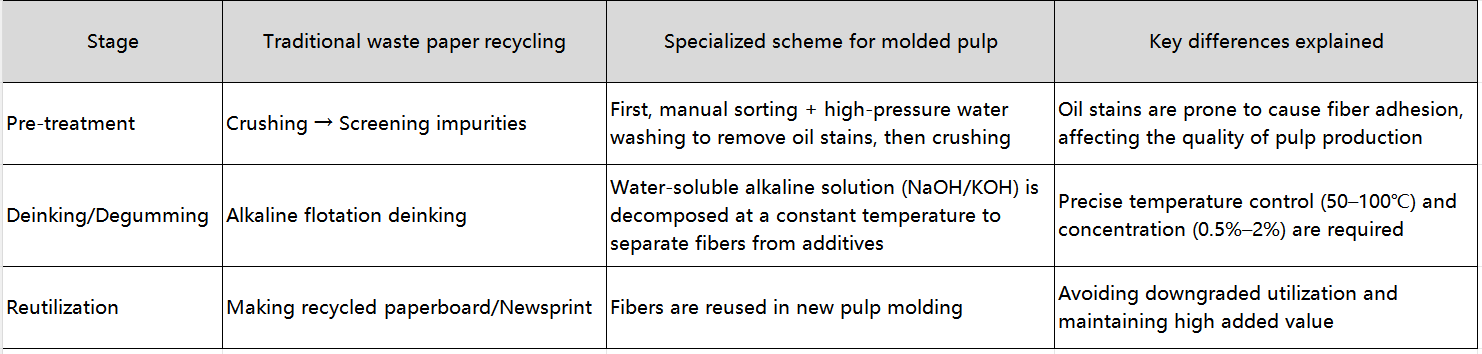
The current mainstream recycling process is aimed at pure waste paper, while molded pulp needs special treatment due to its additives, high density and three-dimensional shape:
Government: Policy-driven + Infrastructure for addressing weaknesses
Regulatory Mandates:
Incorporate molded pulp into the mandatory recycling list under the "Solid Waste Pollution Control Law", requiring enterprises to assume the responsibility for recycling (EPR system);
Set a "green threshold" for export packaging: The EU has already imposed an environmental protection tax on plastic-containing packaging. China can draw on this and impose differentiated disposal fees on paper-plastic composite products.
Infrastructure support:
Add special recycling buckets for molded pulp (different from ordinary waste cartons) in community/business supermarket, supporting intelligent weighing and tracing system;
Subsidies recycling plant equipment with high frequency machine to redistribute purchasing lye decomposition, shorten the technology transformation period.
Recycling status: closed loop initial construction, regional differentiation is obvious
China: A national specialized recycling system has not yet been established. It mainly relies on the mixed processing of "waste paper recyclers + recycled paper mills". However, due to the fact that pulp molding often contains waterproof and oil-proof coatings (such as PFAS or bio-based coatings), about 65% is classified as "other waste paper" and directly landfilled or incinerated. Only the pilot cities in the Yangtze River Delta region (such as Shanghai and Ningbo) have launched community-level "green packaging recycling bins", with a pilot recycling rate of approximately 12% in 2024.
EU: Relying on the amendment of the Packaging and Packaging Waste Regulation (PPWR), it is mandatory for all paper-based packaging to achieve recyclable design certification before 2030, and promote the establishment of the Extended Producer Responsibility System (EPR) special fund to support the sorting center to upgrade optical identification equipment to identify coating types; Netherlands, Germany has built 3 special pulp molding recycling lines, recycled pulp for low-end cardboard production.
North America: The United States has no federal-level recycling directive yet. California's AB792 bill only requires the labeling of compostable labels, and the actual recycling rate is less than 5%. Canada has included pulp molding in the "blue box" system through provincial policies (such as British Columbia), but the sorting accuracy is only about 30%, and a large amount of it enters the impurity stream.
Global molded
pulp packaging recycling is moving from
"conceptual feasibility" to "local implementation", but has not yet formed a large-scale closed loop; The core bottleneck lies in coating compatibility, sorting accuracy and regeneration economy. In the short term (2025 -- 2027), we should focus on: ① Promote the unification of fluorine-free coating standards (such as ISO/TC6 is being formulated); ② Set up smart recycling stations in e-commerce hub cities; ③ Encourage leading enterprises to take the lead in building regional recycling centers. In the medium and long term (2028), with the popularity of AI sorting and the maturity of regeneration technology, the closed-loop rate is expected to exceed 35%, supporting the industry to upgrade from "environmental protection substitutes" to "circular economy infrastructure".






 Guangdong Shiteng Wisdom Technology Co., Ltd.